

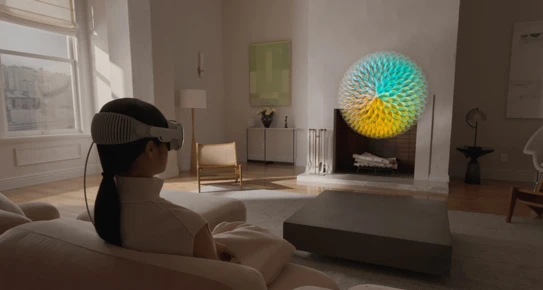
Virtual reality has transformed digital entertainment by allowing users to step into fully immersive virtual worlds. As VR hardware continues to evolve, one feature is rapidly changing the way people interact with digital content: AR passthrough. Instead of isolating users from their surroundings, AR passthrough blends the real world with virtual elements, creating a safer, more interactive, and more practical experience. Many enthusiasts exploring immersive technology through platforms like VSpy are discovering how this feature enhances everything from gaming to productivity and immersive entertainment.
Also Read: How to Prove Medical Malpractice: Step by Step Complete Guide
AR passthrough is no longer an experimental technology. It has become a core feature in many modern VR headsets, helping users transition between virtual and physical environments without removing their devices. Whether someone enjoys gaming, watching immersive videos, attending virtual meetings, or exploring adult VR experiences, AR passthrough offers greater convenience and realism.
What Is AR Passthrough?
AR passthrough is a technology that uses external cameras mounted on a VR headset to capture the real-world environment and display it inside the headset. Digital objects can then be placed over the live camera feed, allowing users to interact with both physical and virtual surroundings simultaneously.
Unlike traditional virtual reality, where users are completely immersed in a digital world, AR passthrough provides awareness of the physical environment while maintaining access to virtual content.
How It Works
Modern VR headsets contain multiple high-resolution cameras positioned around the device. These cameras continuously capture the environment and send the video feed to the headset’s displays. Advanced software processes the images in real time, correcting distortion and adding digital objects where appropriate.
The result is an experience that feels natural while maintaining the immersive qualities of virtual reality.
Benefits of AR Passthrough
AR passthrough provides several practical advantages that improve everyday VR use.
Improved Safety
One of the biggest concerns with virtual reality is losing awareness of nearby objects. AR passthrough helps users avoid furniture, walls, pets, and other obstacles without removing their headset.
This greatly reduces the risk of accidental collisions and creates a safer environment for longer sessions.
Better Convenience
Users no longer need to remove their headset every time they receive a notification, answer the door, check their keyboard, or locate a controller.
Instead, they can quickly switch to passthrough mode and continue their activity without interrupting the experience.
Increased Comfort
Removing and replacing a headset repeatedly can become inconvenient. AR passthrough eliminates much of this disruption, making extended VR sessions more comfortable and enjoyable.
AR Passthrough vs Traditional Virtual Reality
Although both technologies use VR headsets, their user experiences differ significantly.
| Traditional VR | AR Passthrough |
| Completely virtual environment | Combines virtual and real worlds |
| Limited awareness of surroundings | Maintains visibility of physical space |
| Better for full immersion | Better for multitasking |
| Ideal for gaming | Ideal for gaming, productivity, and mixed reality |
| Requires removing headset frequently | Less need to remove the headset |
The choice depends on how users prefer to interact with digital content.
Gaming Becomes More Interactive
Gaming has always been one of the strongest applications of virtual reality, but AR passthrough introduces new possibilities.
Developers can create games that transform a player’s living room into an interactive battlefield, puzzle room, or adventure environment. Furniture can become obstacles, tables can become game boards, and walls can display digital portals.
This creates experiences that feel unique because they adapt to each user’s environment.
Watching Immersive Videos
Video streaming has also benefited from AR passthrough technology.
Instead of watching content inside a completely virtual theater, users can place a large virtual screen within their own living room while remaining aware of their surroundings.
This approach combines immersion with comfort, making longer viewing sessions more enjoyable.
For users interested in immersive digital entertainment, this technology supports many different content categories, including educational experiences, virtual travel, live performances, documentaries, and mature VR content.
Productivity Beyond Entertainment
Although VR is often associated with gaming, AR passthrough is becoming increasingly valuable for work and education.
Professionals can create multiple virtual monitors while still seeing their keyboard, desk, and coworkers.
Students can interact with educational models placed on real tables while maintaining awareness of books and notes.
This combination improves efficiency without sacrificing immersion.
Common Productivity Uses
Virtual office workspaces
Remote collaboration
Digital whiteboards
3D design and modeling
Architecture visualization
Medical education
Engineering simulations
As mixed reality continues developing, these applications are expected to become even more advanced.
Enhanced Social Experiences
Social VR platforms are becoming increasingly popular because they allow users to meet friends from anywhere in the world.
AR passthrough improves these interactions by making users feel less isolated from their physical environment.
Instead of feeling disconnected from reality, users can comfortably interact with both virtual participants and people nearby.
This creates a more natural balance between digital and real-life communication.
Why AR Passthrough Matters for Content Creators
Content creators benefit significantly from passthrough technology.
They can monitor recording equipment, cameras, microphones, and lighting setups while remaining inside the virtual environment.
This improves workflow efficiency and reduces interruptions during production.
Creators producing immersive VR videos can also better visualize how audiences experience their content.
Better Accessibility
AR passthrough also makes VR more accessible for new users.
Beginners often feel uncomfortable wearing a headset because they lose awareness of their surroundings.
Passthrough technology reduces this anxiety by allowing users to maintain visual contact with their environment.
As a result, first-time users generally adapt to VR much faster.
Hardware Improvements Driving Innovation
Recent hardware improvements have dramatically enhanced passthrough quality.
Higher Resolution Cameras
Modern headsets now feature cameras capable of producing much sharper images than earlier generations.
Higher resolution improves text readability, object recognition, and overall comfort.
Faster Processing
Powerful processors reduce image delay, creating smoother transitions between virtual and physical environments.
This minimizes motion sickness and improves realism.
Better Depth Mapping
Advanced sensors accurately understand room dimensions and object placement.
This allows digital content to interact naturally with real furniture and walls.
Mixed Reality Is Becoming the Future
Many technology experts believe mixed reality will eventually become more common than traditional virtual reality.
Instead of choosing between reality and virtual environments, users will combine both.
Future applications may include:
Interactive education
Virtual fitness coaching
Interior design visualization
Home improvement planning
Medical training
Shopping experiences
Advanced navigation
Remote technical support
The flexibility of AR passthrough makes these possibilities increasingly practical.
Privacy Considerations
Like many modern technologies, AR passthrough raises important privacy questions.
Since cameras continuously observe the user’s surroundings, manufacturers must carefully protect captured data.
Users should always:
Review privacy settings.
Install firmware updates.
Understand camera permissions.
Secure their headset accounts.
Use trusted applications.
Responsible privacy practices help ensure a safer immersive experience.
Choosing a Headset with Good Passthrough
Not every VR headset offers the same passthrough quality.
When comparing devices, consider:
Camera Resolution
Sharper cameras provide clearer real-world images.
Color Accuracy
Color passthrough creates a more realistic viewing experience than grayscale cameras.
Field of View
A wider field of view improves immersion and spatial awareness.
Latency
Lower latency reduces motion discomfort during movement.
Software Support
Regular updates continue improving passthrough features long after purchase.
The Future of Immersive Entertainment
AR passthrough represents one of the biggest advancements in consumer virtual reality. Rather than replacing reality, it enhances it by combining digital experiences with the physical world.
As hardware becomes lighter, displays become sharper, and software becomes more intelligent, users will enjoy increasingly realistic interactions across gaming, education, entertainment, business, and communication.
The technology also supports evolving forms of immersive media, including virtual events, interactive storytelling, and adult VR experiences that emphasize realism and user comfort.
Final Thoughts
AR passthrough is changing how people experience virtual reality by making immersive technology safer, more practical, and more versatile. Instead of separating users from their surroundings, it allows both physical and digital worlds to work together seamlessly. This innovation benefits gamers, professionals, students, and anyone interested in next-generation entertainment.
As mixed reality continues to evolve, features like AR passthrough will become standard across future VR devices. Whether you’re exploring virtual workspaces, interactive games, or immersive videos, resources available through VSpy provide valuable insight into how this technology is shaping the future of digital experiences.
